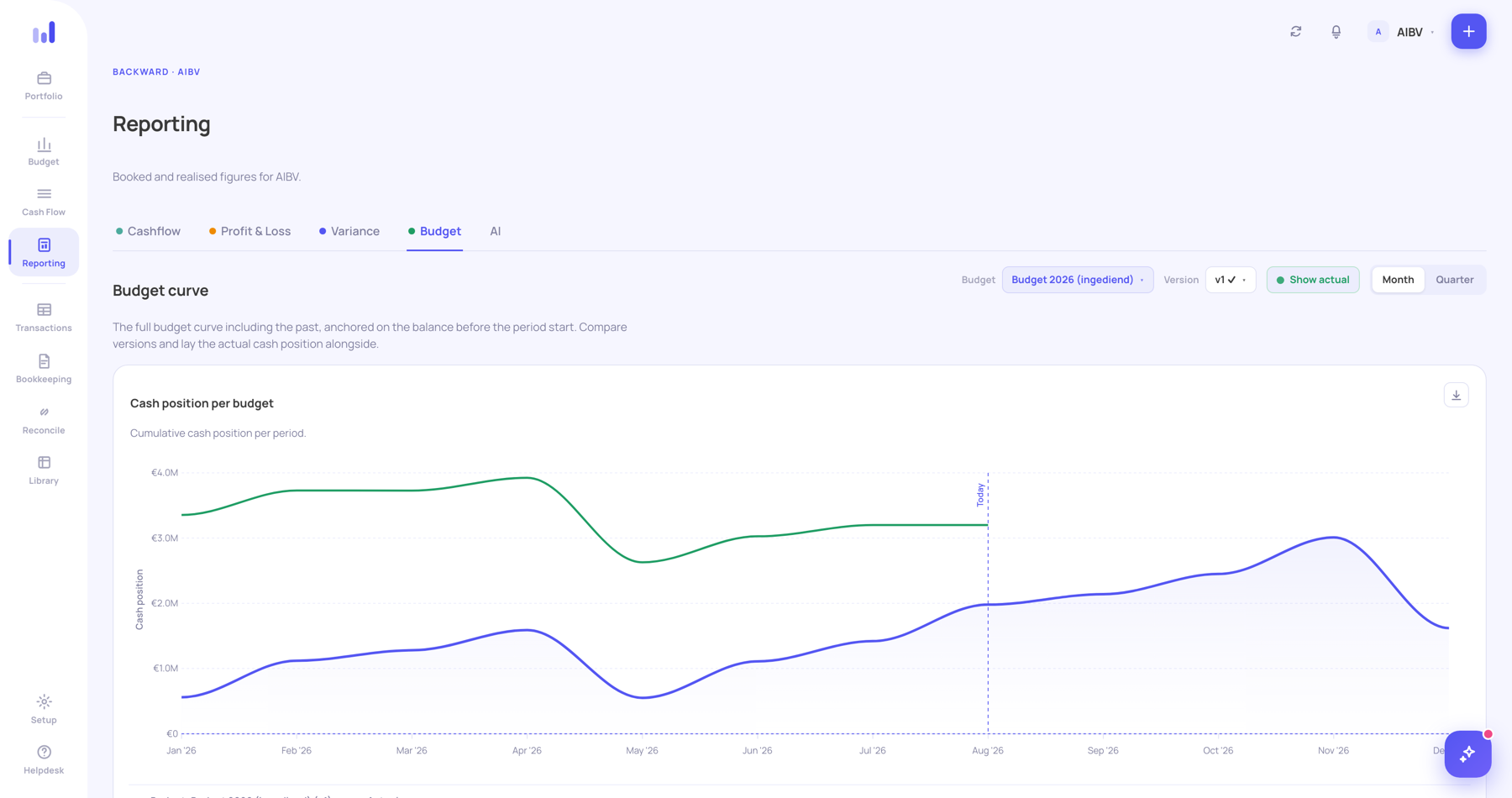
You set a target next to what's actually in your account and in your forecast. The gap between the two tells you exactly what's left to do to hit it.
One line is your target: the budget you've set, anchored on today's bank balance. The other line is your reality: bank, outstanding, committed and expected, added up. As long as those two lines stay close, you're on track.
Every plan with budget starts at the category. From Holding onwards you split further, and work with several versions side by side.
Two budget rounds a year that need to run side by side, or a budget that runs per department: that's exactly why a growing company ends up on Holding, even with just one company.
Budgeting doesn't stop once you've set a target. Here's how the rest works in practice.
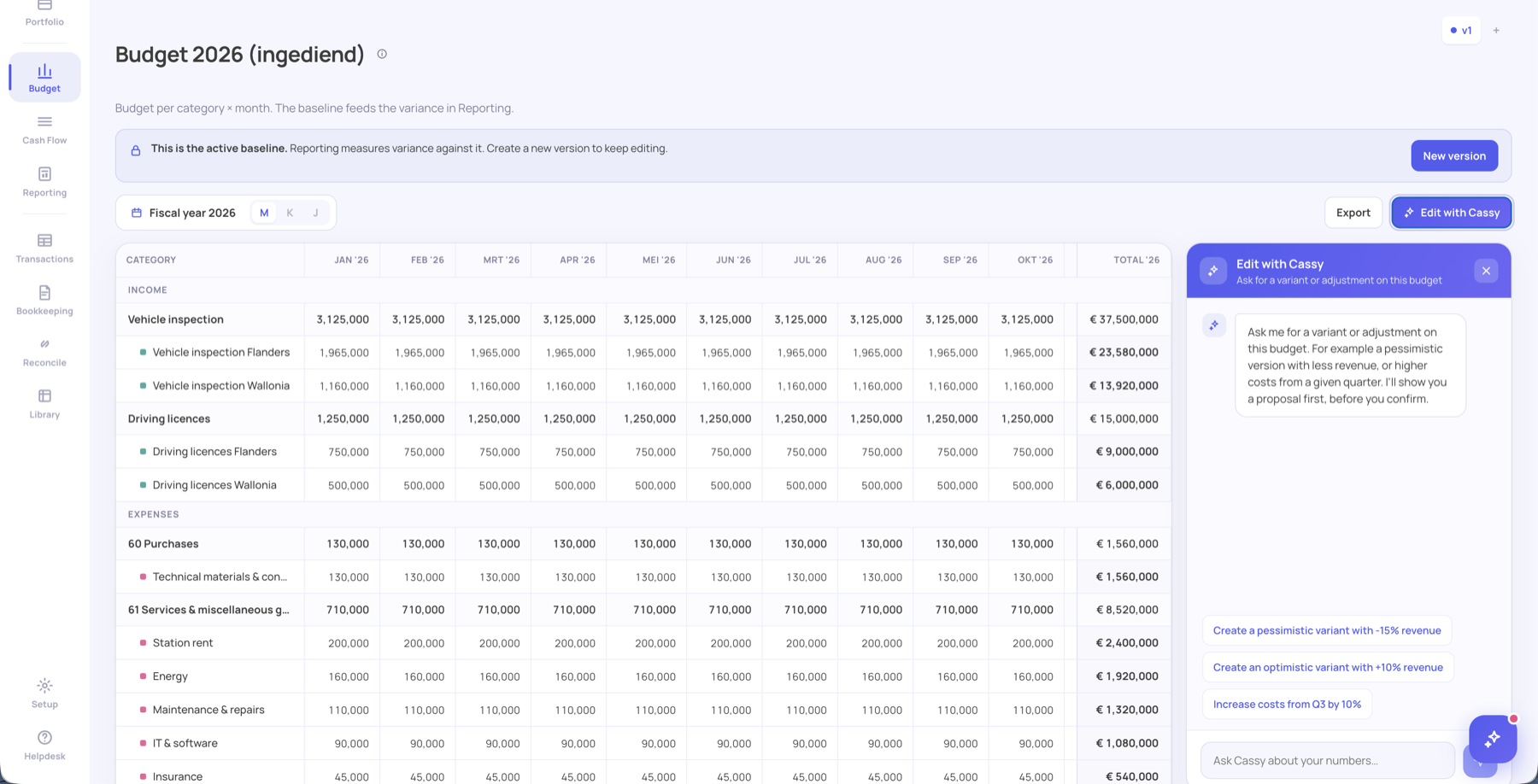
No restructuring beforehand. Your existing setup is carried over, and you recognize your own budget straight away.
"Raise staff cost in the third quarter by 8%." You describe the change the way you'd tell your controller, and the model adjusts. No number changes without you accepting it.
For whoever needs to be able to trust that it's correct.
Your bank transactions come in via Ponto, connected to 1,500+ banks.
Exact Online, Yuki, Odoo, Winbooks, Billit, Teamleader: your accounting stays the source, Cashplannr reads it.
Every number in your forecast opens up to the transaction or the line it came from.
No number changes without someone accepting it.
The AI runs on AWS Bedrock in Europe, with data minimization. No training on customer data.
Connecting bank and accounting takes one afternoon. Bringing in and setting up your model takes three to four weeks.
We go through your current budget model and show how it sits next to your real cashflow.